
Consultant-driven solutions for fire sprinkler corrosion detection and prevention. From diagnostics to long-term control — protecting your building's fire protection infrastructure.
Questions? Call us: 619.255.9547
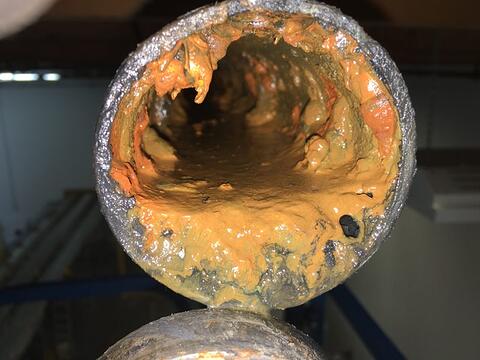
Corrosion is a general term that can include oxidation, cathodic etching, and biologically influenced water chemistry changes. The most common form of corrosion in the built environment is oxygen cell corrosion.
Found throughout the built environment.
Steel piping contacts oxygen and water, triggering a reaction that produces iron oxide (rust) through a positive-charge reaction.
Occurs when piping becomes negatively charged.
Ferrous piping becomes negatively charged, creating an electrochemical reaction that accelerates deterioration.
Microbiologically Influenced Corrosion — the most intrusive and difficult to resolve.
Bacteria and other microbes form biofilms on metal surfaces, feeding on nutrients in the water and creating a corrosive environment.
Microbiologically Influenced Corrosion (MIC) occurs when microbes form bacterial colonies inside fire sprinkler system piping. Over time, MIC can degrade or cause failure in systems such as boilers, cooling towers, heat exchangers, process piping, and fire protection systems.
It leads to premature metal failure in both wet and dry sprinkler and standpipe systems. MIC can actively or passively attack steel piping, and active infections will continue spreading unless treated. Contributing factors include pH, material defects, nutrients, temperature, low flow, and oxygen levels.
MIC is typically localized, meaning specific sections may experience severe degradation, but system-wide failure is rarely found. Unfortunately, the contracting community promotes high-cost system replacements without accurately assessing the actual extent of damage.
Detection tools such as video scoping (utilizing serpentine borescopes) help to visualize internal pipe conditions and substantiate the scope of infections and potential impairments.
Flushing fire sprinkler systems with fresh water only exacerbates the problem. Fresh water introduces new oxygen and nutrients, which can revitalize anaerobic bacteria and re-energize their growth, leading to more aggressive corrosion.
Inadequate or misplaced air release systems create high points where oxygen accumulates, and accelerates both aerobic bacterial growth and corrosive conditions.
Comprehensive assessment of water quality, system conditions, degree of impairment and scope of necessary repairs. We diagnose before we prescribe — every engagement starts with the facts.
Removal and replacement of system piping determined to be irreparable. Chemically clean, then treat system water with corrosion inhibitor solution. Every recommendation is backed by a comprehensive Assessment Report.
Following diagnostic testing and remediation planning, our Corrosion Control Program provides a proactive, long-term solution to protect your fire sprinkler system from continued deterioration. This step focuses on stabilizing internal conditions by reducing oxygen levels, and mitigating microbiologically influenced corrosion (MIC) to prevent the corrosion process.
The Corrosion Control Program is designed to provide building owners with predictable maintenance costs, improved system reliability, and peace of mind knowing their fire protection infrastructure is actively protected.
IDS Real Estate Group has been working with Corrosolve for several years now and they always do an impeccable job on our properties. The team is highly experienced and knowledgeable in this field, and we put our utmost trust in their work. We will continue to work with them in the future knowing that we can always expect top tier customer service and count on their high-quality fire protection services and consultation.
Don't wait for a pinhole leak or a failed inspection. Get a comprehensive corrosion assessment from a consultant-driven team with the expertise to diagnose, remediate, and protect your system long-term.
We typically respond within one business day.